|
The Railfaneurope.net Picture Gallery
Directory: /pix/de/trams/Koeln/misc
Last update: Thu Dec 15 13:10:09 CET 2011
|
|
Former station of Urfeld, 05-12-2011.
© Eddy Konijnendijk. |
|
Former station of Urfeld, 05-12-2011.
© Eddy Konijnendijk. |
|
Former station of Widdig, 05-12-2011.
© Eddy Konijnendijk. |
|
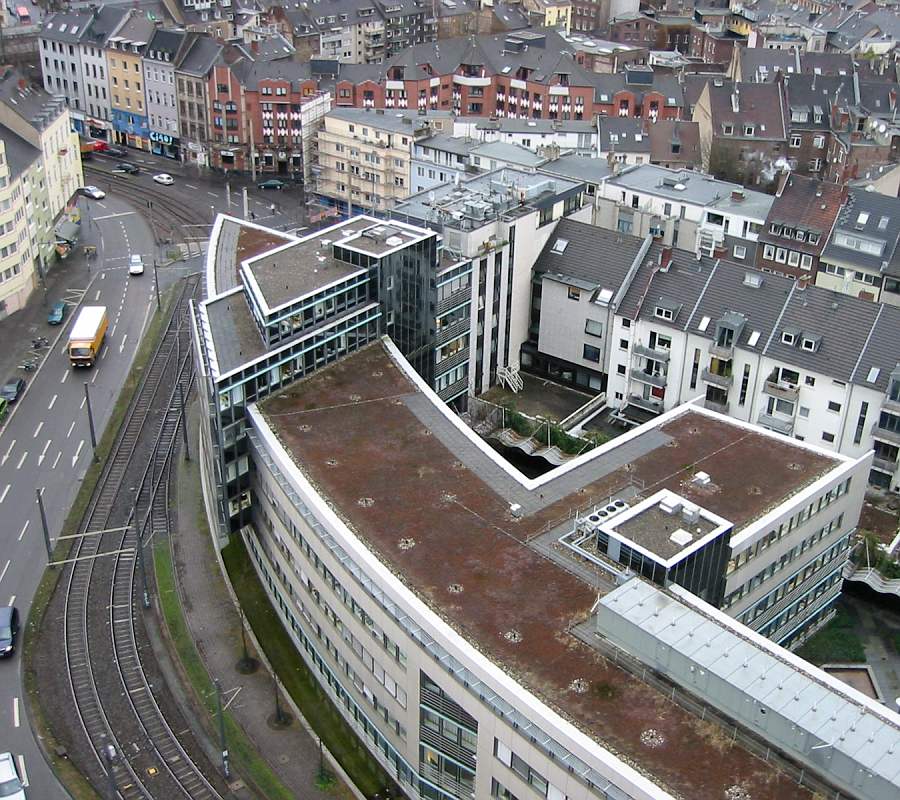
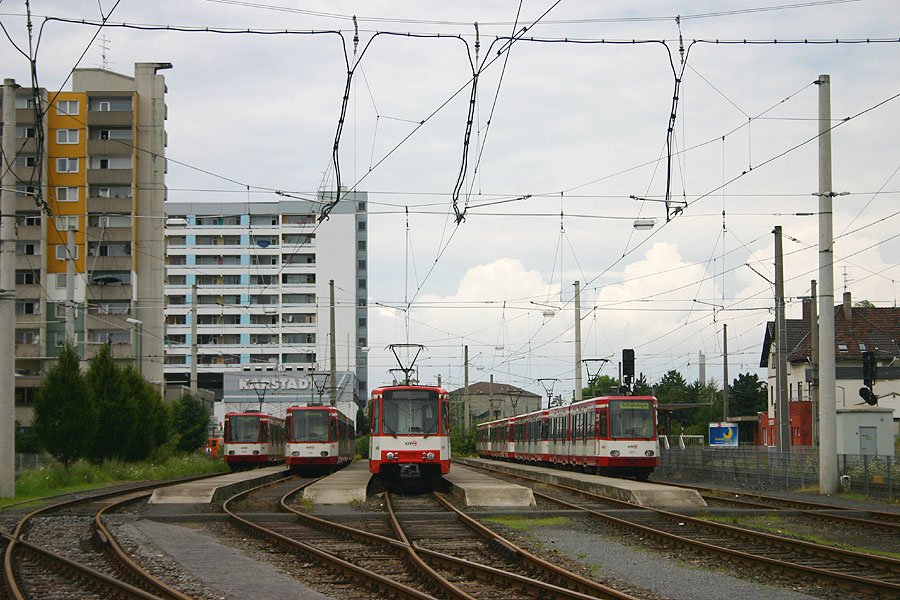
This is the southern part of the area where the station Barbarossaplatz of the
Köln-Bonner Eisenbahn (KBE) used to be. The tracks of the so called
Vorgebirgsbahn ran along the Luxemburger street (on the left in the background)
and ended here. Nowadays this line is part of the tram network, so the tracks
pass along this area, which is now occupied by various buildings, and proceed
into the city center. Note that there is one single siding track left. Picture
taken from the 17th floor of the
TausendFenster-Turm on 18
January 2005.
Digital photo by Christoph Schmitz (christoph.schmitz2@post.rwth-aachen.de) |
|
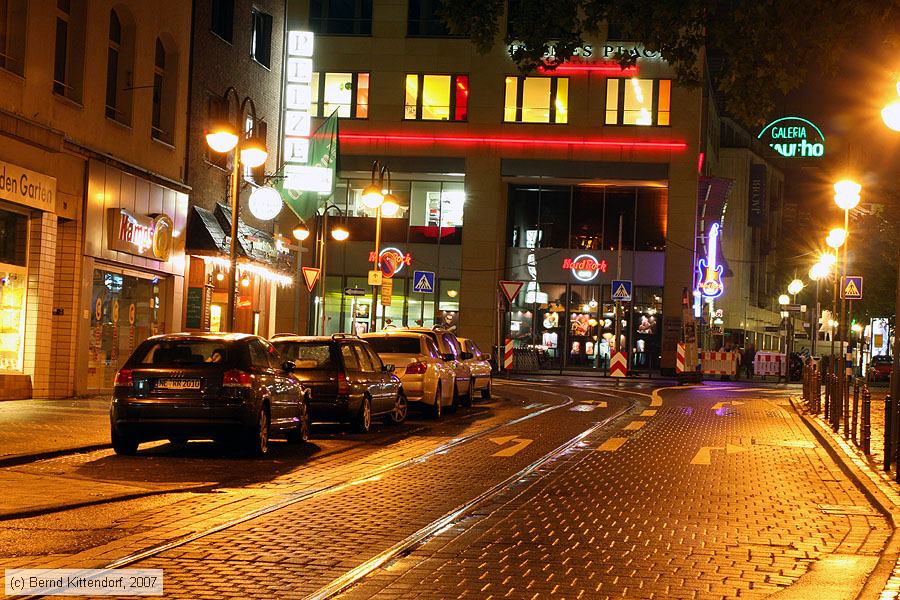
Stadtbahn Köln - Haltestellen Haltestelle Heumarkt in Richtung Neumarkt gesehen am 01. Oktober 2007.
Photo: Bernd Kittendorf (info@bernd-kittendorf.de) |
|
Stadtbahn Köln - Haltestellen Haltestelle Neumarkt am Abend des 01. Oktober 2007.
Photo: Bernd Kittendorf (info@bernd-kittendorf.de) |
|
Stadtbahn Köln - Haltestellen Haltestelle Neumarkt am Abend des 01. Oktober 2007.
Photo: Bernd Kittendorf (info@bernd-kittendorf.de) |
|
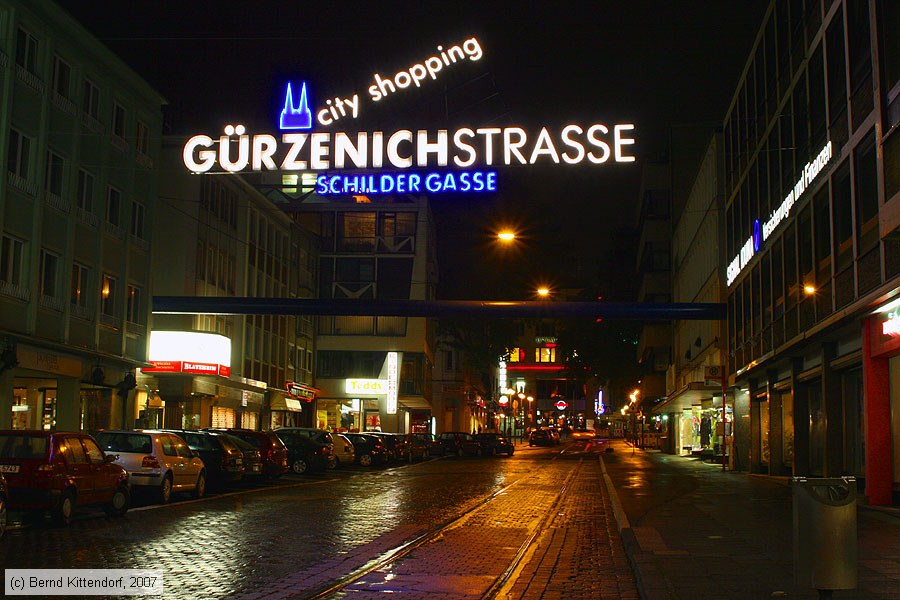
Straßenbahn Köln - Anlagen Aufgegebene Gleise in der Gürzenichstraße nahe der Haltestelle Heumarkt am Abend des 01. Oktober 2007.
Photo: Bernd Kittendorf (info@bernd-kittendorf.de) |
|
Straßenbahn Köln - Anlagen Aufgegebene Gleise in der Gürzenichstraße nahe der Haltestelle Heumarkt am Abend des 01. Oktober 2007.
Photo: Bernd Kittendorf (info@bernd-kittendorf.de) |
|
Stadtbahn Köln - Haltestellen Haltestelle Sülzgürtel der Linie 18 am 03. Oktober 2007. Links führen die Verbindungsgleise zu der Endstelle der Linie 13.
Photo: Bernd Kittendorf (info@bernd-kittendorf.de) |
|
Stadtbahn Köln - Haltestellen Abfahrtafel an der Haltestelle Sülzgürtel am 03. Oktober 2007. Solch große Tafeln befinden sich an vielen Haltestellen des Verkehrsbetriebs.
Photo: Bernd Kittendorf (info@bernd-kittendorf.de) |
|
Stadtbahn Köln - Haltestellen Haltestelle Aachener Straße / Gürtel am 03. Oktober 2007.
Photo: Bernd Kittendorf (info@bernd-kittendorf.de) |
|
Stadtbahn Köln - Anlagen Endstelle der Stadtbahnlinie 1 (rechts im Bild) und Haltepunkt der S-Bahn in Köln Weiden West (auf dem Bahndamm) am 03. Oktober 2007.
Photo: Bernd Kittendorf (info@bernd-kittendorf.de) |
|
Stadtbahn Köln - Fahrscheinautomat Fahrkartenautomat an der Endstelle der Linie 1 in Weiden West am 03. Oktober 2007.
Photo: Bernd Kittendorf (info@bernd-kittendorf.de) |
| Underground station Dom-Hauptbahnhof near Cologne main station Oct. 2005 (c) J. C. Stiller (stiller_the_at_symbol_brain.uni-freiburg.de) |
|
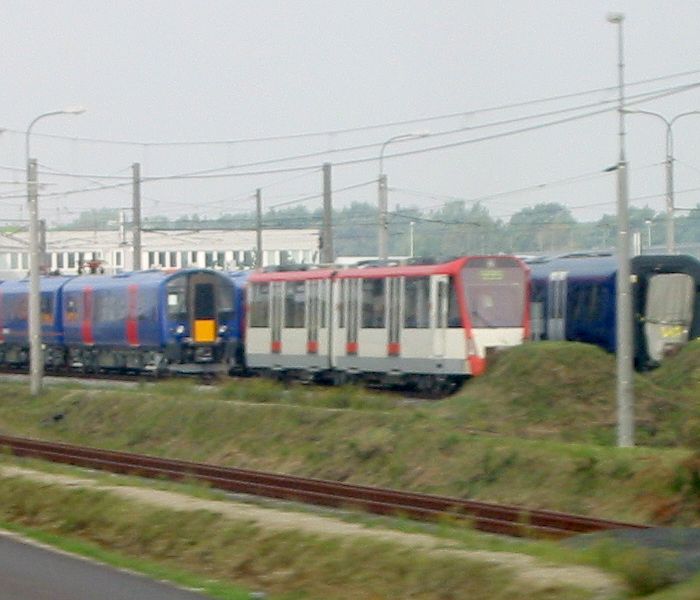
Prototype tramcar 5002, originally intended for the Kölner
Verkehrsbetriebe (KVB), seen at the Open Day at the Wildenrath Test Centre of
Siemens on 25 August 2002. After the first prototype of this class, tramcar
5001, crashed seriously on 23 August 1999, the project was cancelled. Since
then, 5002 is stored. Picture taken from a moving train, sorry for the bad
quality.
Digital photo by Christoph Schmitz |
|
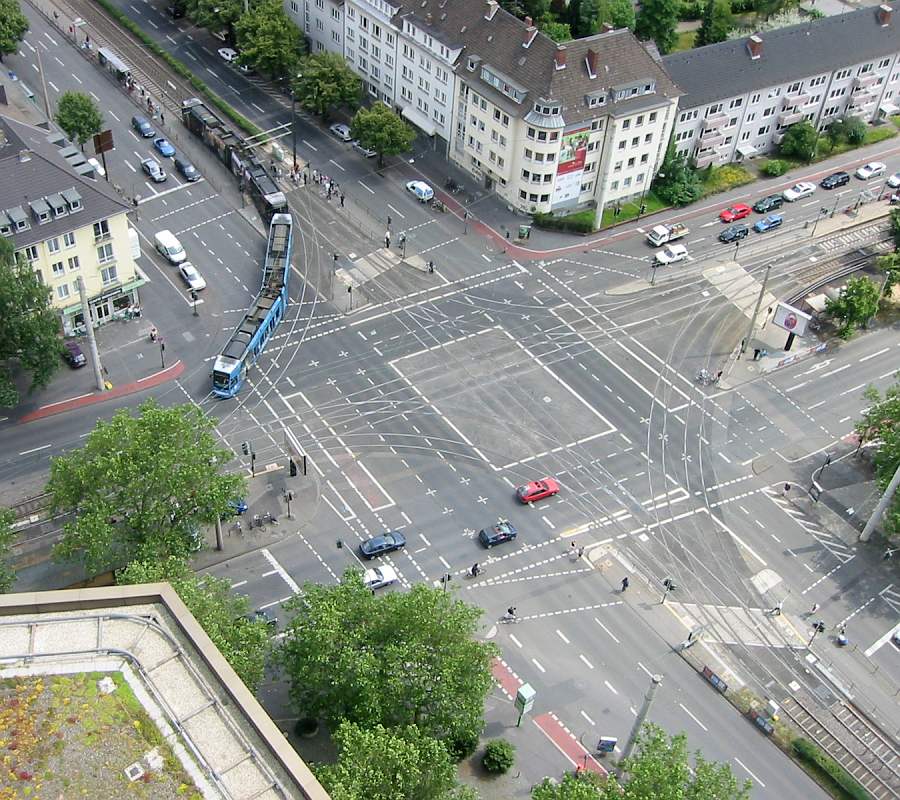
The crossing of Aachener Straße and Gürtel in Cologne seen from the
18th floor of the DKV building on 26 June 2004. This is the only crossing where
running from each direction into each direction is possible. Line 1 and line 13
run straight through, the 1 from the lower right corner (towards Weiden) to the
upper left (towards the city center and Bensberg), the 13 from the right side
(towards Sülzgürtel) to the left (towards the northern Gürtel
and Holweide). Line 7 uses the connection from the right (towards Frechen,
leaving the Gürtel again further south) to the upper left (towards the
city center and Zündorf). The two connections to the left are frequently
used by trains to and from the West depot, which is reached by a short line
branching from the Gürtel about hundred meters north of this crossing.
Two low-floor trams of 4000 series are just heading for the depot. There are
four platforms, each one located in front of the crossing where the trams have
to wait anyway in most cases.
Digital photo by Christoph Schmitz (christoph.schmitz2@post.rwth-aachen.de) |
|
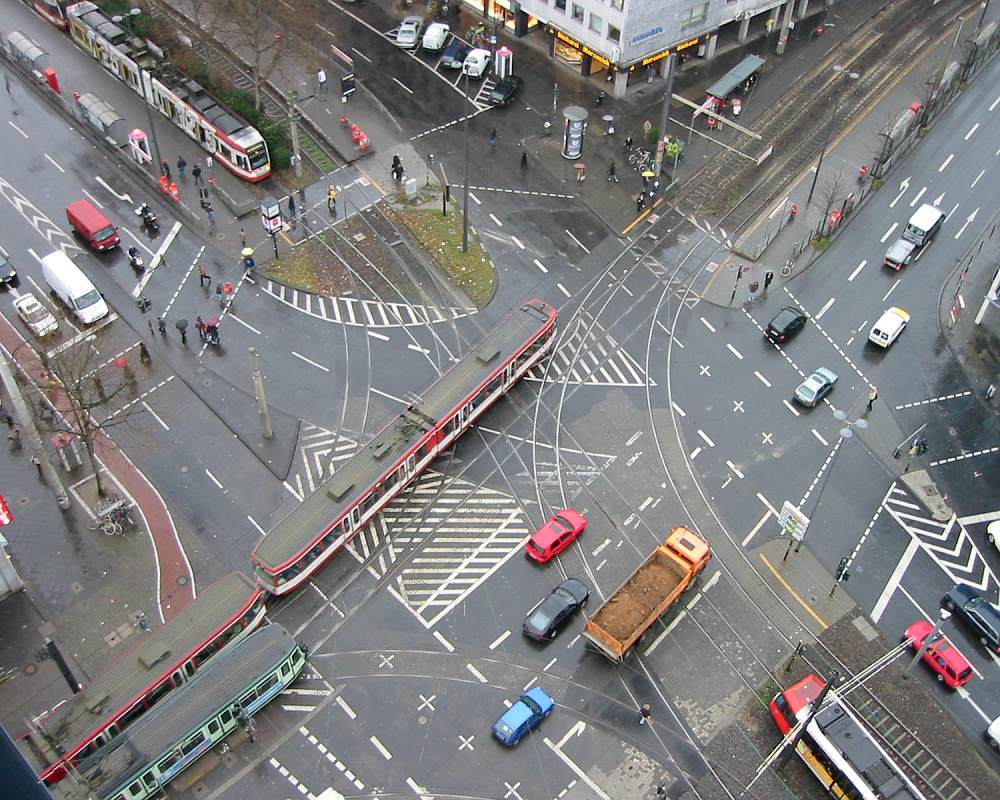
The tram crossing Barbarossaplatz in Cologne seen from the 17th floor of the
TausendFenster-Turm on 18
January 2005. This is the busiest tram junction in Cologne (as long as only
lines running on the surface are considered) with seven lines running in
different directions. Line 6, 12 and 15 run from the northern ring line (upper
left corner, next station Zülpicher Platz) to the southern ring line
(lower right corner, next station Eifelstraße). Line 18 and 19 come from
the city center tunnel (upper right corner, next station Poststraße) and
proceed along the Luxemburger street (lower left corner, next station
Eifelwall). Line 16 and 17 do also come from the city center, but turn left
towards the southern ring. All platforms are located on the north side
(towards the northern ring respectively the city center), so a train using the
connection at the lower edge of the picture would not pass a platform. The
train waiting at the upper left corner consists of low-floor cars of 4000
series, so it is line 12. The livery with the "125" on the first car was applied
in 2002, when the Kölner Verkehrsbetriebe (KVB) were 125 years old. A train
of 2300 series cars is just crossing the area towards Luxemburger street, this
could be a line 18 or 19. The green car entering in the opposite direction
belongs to the Stadtwerke Bonn (SWB). It is similar to the 2000 series of
Cologne, but in Bonn another numbering scheme is used. As this train comes from
Bonn, it must be line 18. The 5100 series car in the lower right corner is
waiting to proceed to the northern ring, so it is line 15, as line 6 uses the
old eight-axled cars of 3100 and 3200 series.
Digital photo by Christoph Schmitz (christoph.schmitz2@post.rwth-aachen.de) |
|
The tram station Berliner Straße in Cologne seen on 14 June 2003. On this
day the finishing of the modifications of line 4 was celebrated. Rides with a
skylift were offered for those who wanted to photograph or just watch the new
station from above. From 15 June on the bus stop at this station is in service,
so the station Neurather Weg (former end station of bus line 155) was closed.
In the past the rails coming from the right side continued along the street to
the left, leaving it at the station Rixdorfer Straße which is now closed.
Several stations were modified, now the platforms are all high enough to allow
the newest tramcars to be used on line 4.
Digital photo by Christoph Schmitz |
|
The excavation for the new underground station Bonner Wall in the south of
Cologne, seen from the northern end on 18 March 2006. On the right in the
background the pit extends to a ramp leading to the end station
Marktstraße, which is located on the surface. On the left, where the
sheet pile wall is visible, another ramp towards the bank of the Rhine will be
built. Trams of line 16 will use it to reach the old course of the Rheinuferbahn
north of the stop Schönhauserstraße, while those of lines 5 and 17
will travel to the Marktstraße. This excavation also is the starting pit
for the two tunnel drilling machines, which will drill two tubes (one for each
track) from here to a place near the main station. Most of the excavation is
covered to allow the surface traffic to flow unobstructedly (more or less). The
startup of the new underground line is planned for 2010.
Digital photo by Christoph Schmitz (christoph.schmitz2@post.rwth-aachen.de) |
|
The excavation for the new underground station Bonner Wall in the south of
Cologne, seen from the southern end on 22 July 2006. This is in fact the eastern
half of the pit, where the tunneling machine "Tosca" was lined up in April.
Since the start of the drilling on 6 June it has made 240 m, thus from here only
the empty tunnel is still visible in the background. The narrow gauge line
running into the tunnel is used to bring the concrete segments for the lining,
the excavated ground is transported through the pipes on the left (mixed with
bentonite suspension). The wide pipe at the top is used for the ventilation.
The startup of the new underground line is planned for 2010.
Digital photo by Christoph Schmitz (christoph.schmitz2@post.rwth-aachen.de) |
|
The underground station Breslauer Platz/Hbf next to the main station ("Hbf"
is the abbreviation for "Hauptbahnhof", the German word for "main station") in
Cologne seen from the entrance on 28 October 2006. For the construction of the
new underground line through the city centre, which branches off at the main
station, the station has to be reconstructed completely to become a junction
station with three platform tracks. For ten months the line between here and
Dom/Hbf is closed, and this temporary station located in the tunnel north of the
former station is used as terminal for line 19 (all other lines are diverted). A
low platform was built where the right track used to be, while the left track
remained (ending at a buffer stop which is out of the picture on the left). The
access is provided by the northern access of the former station, now located at
the southern end of the temporary station. The column and the fence on the left
mark the northern end of the old station, the latter was installed between the
tracks to avoid passengers crossing them. The startup of the new underground
line is planned for 2010.
Digital photo by Christoph Schmitz (christoph.schmitz2@post.rwth-aachen.de) |
|
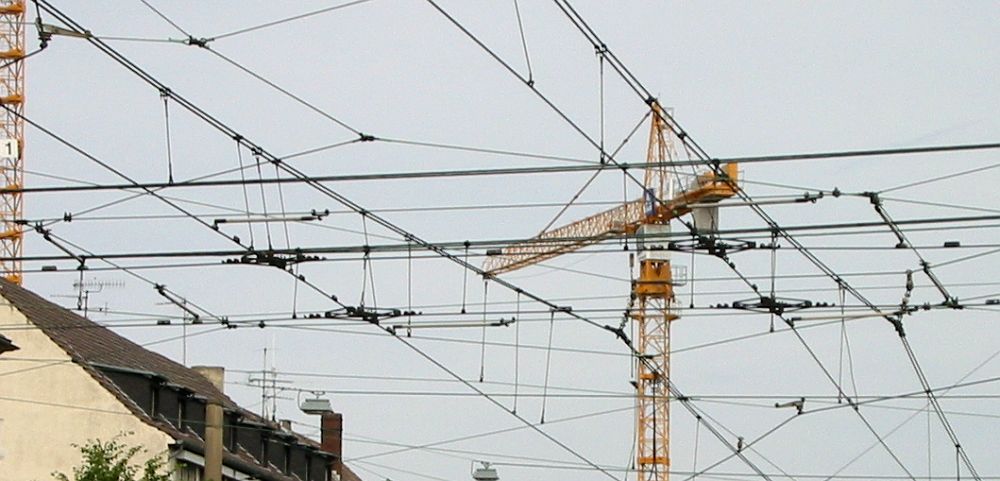
At the crossing of Aachener Straße and Gürtel in Cologne, there are
these rectangular crossings of the tram catenary. The diamond shaped frames
keep the contact wires at the same level. Picture taken on 15 June 2002.
Digital photo by Christoph Schmitz |
|
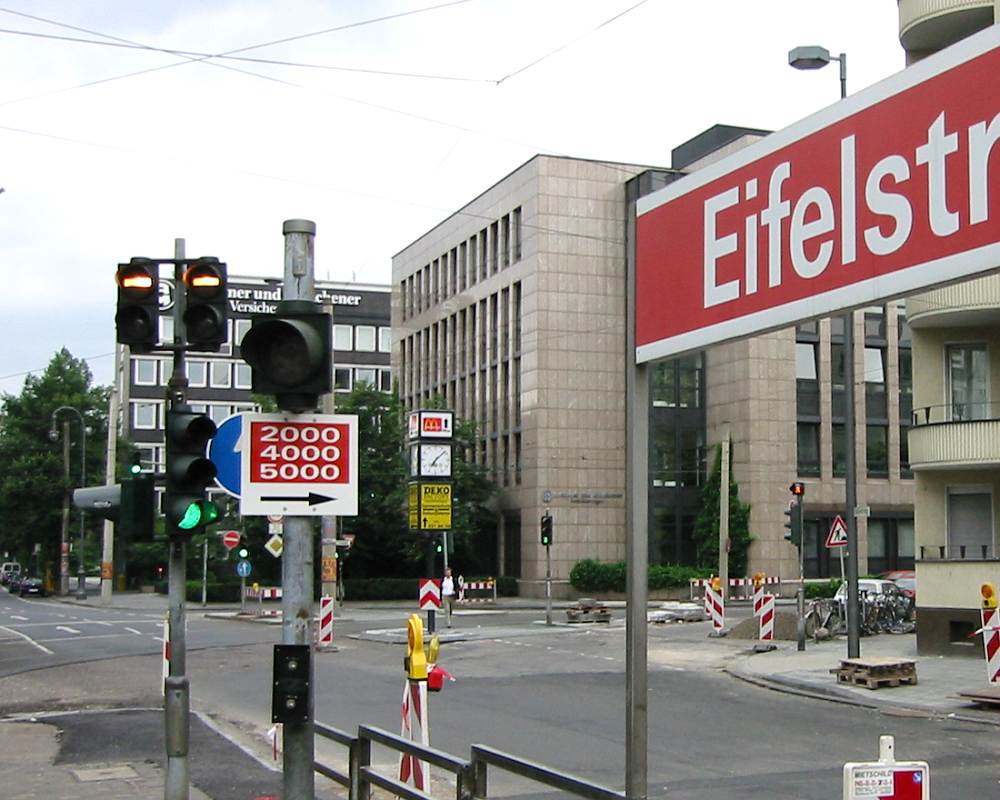
Some signals at the tram station Eifelstraße in Cologne seen on 13 July
2002. The red board with the numbers is a Sh2. It says that tramcars of 2000,
4000 and 5000 series are not allowed to proceed to the right onto the southern
branch of line 12. The reason is that the turning loop in Zollstock is to tight
for six-axled cars. Above the board is the switch indicator which is dark at
the moment. If the switch is activated automatically by the tram or manually
with a key at the box below, it shows if it leads to the right (Wn9) or to the
"left" (Wn10) (in fact, this is the straight direction). Above the traffic
light are the F signals for each branch, they act like traffic lights for the
trams.
Digital photo by Christoph Schmitz |
|
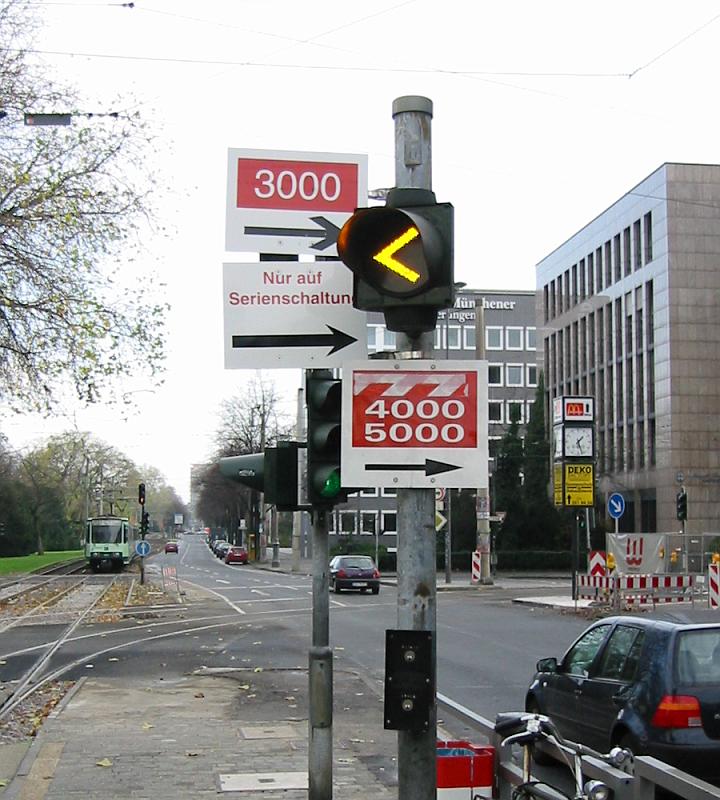
Some signals at the tram station Eifelstraße in Cologne seen on 17
November 2002. For some weeks now the line 12, the only line proceeding to the
right here, is operated with six-axled cars of 2000 series instead of
eight-axled cars of 3000 series. The turning loop in Zollstock was replaced by
a switch connection, as the six-axled cars have two cabs. On the Sh2 forbidding
4000 and 5000 series to turn right, the 2000 was covered with tape. Another Sh2
with a 3000 on it was added. The sign below it advises the drivers to switch
the motors only serial, not parallel, as this would draw to much current from
the catenary on this branch. The yellow switch indicator shows Wn10, the switch
leads to the "left" (which is in fact the straight direction). It was activated
by a tramcar of line 17 that is just approaching. In the background two Bonn
tramcars disappear towards their hometown on line 16.
Digital photo by Christoph Schmitz |
|
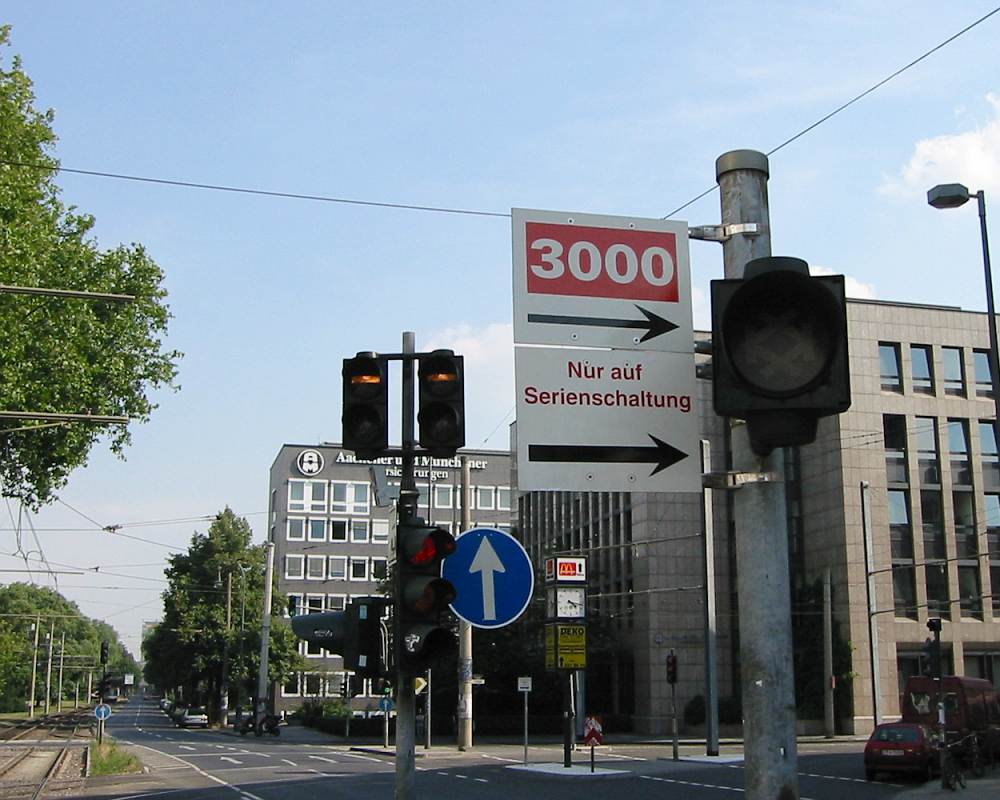
Some signals at the tram station Eifelstraße in Cologne seen on 26 August
2003. Only the Sh2 for 3000 series cars is still present, as 4000 and 5000
series are by now approved for the line to Zollstock. However 5000 series (as
well as 2200 and 2300 subseries) cars would not be able to board passengers
from street level, what is required on this line. It is planned to put 4000
series low-floor trams into service here in the future. The hint to draw not to
much current ("Nur auf Serienschaltung") is still present, but works to upgrade
the catenary are going on.
Digital photo by Christoph Schmitz |
|
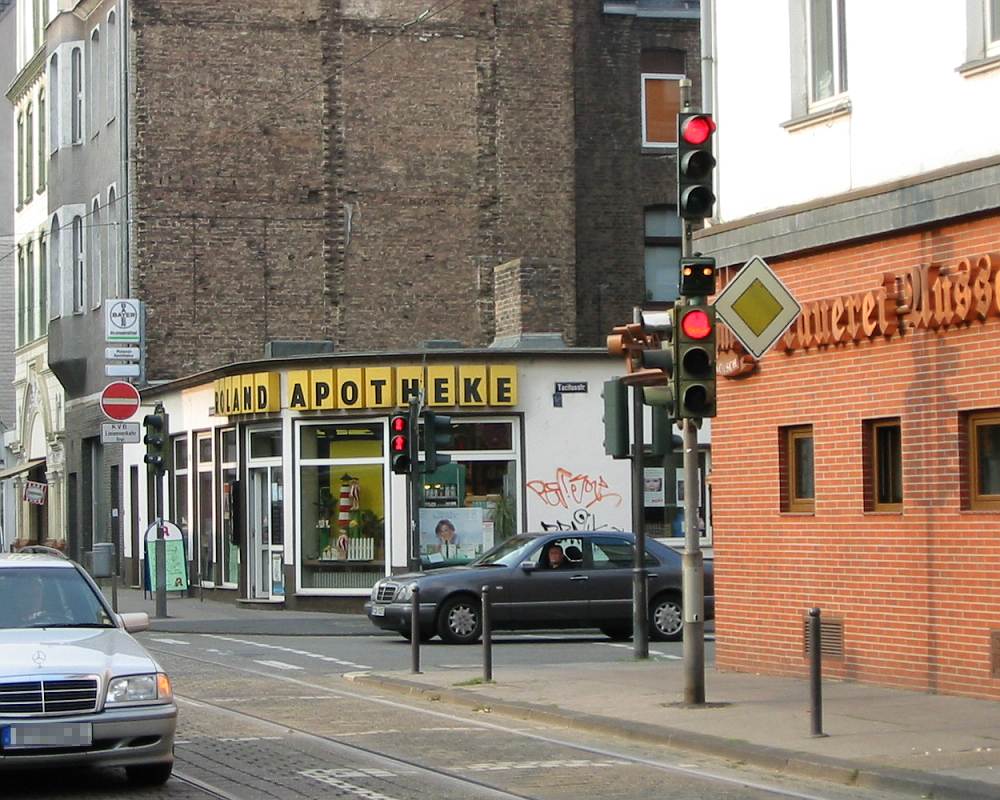
An old F signal of the Kölner Verkehrsbetriebe (KVB) at the station
Tacitusstraße (the box with the two white lights between the two traffic
lights). It shows F 0 (stop). Seen on 30 August 2002, the last day the line was
in service.
Digital photo by Christoph Schmitz |
|
The turning track at the tram station Haus Vorst in the west of Cologne seen on
17 March 2005. During times with a high traffic density, some trams coming from
the centre of Cologne end here to go back again, instead of running through to
Frechen-Benzelrath. This line, which was operated by the
Köln-Frechen-Benzelrather Eisenbahn (KFBE) in the past, is technically a
"real" railway line, although the catenary is fed with 750 V DC. Freight trains
are pulled by diesel locos of the Häfen und Güterverkehr Köln
(HGK). Note that the switch in the foreground has a movable frog, so it can be
passed by freight trains (with a wide wheel profile) and trams (with a narrow
wheel profile). The switch in the background is only passed by trams, so it has
a fixed frog and very narrow gaps for the wheels. The leftmost track is not
electrified, it connects the Grundig factory at Marsdorf with the station
Frechen (the next station).
Digital photo by Christoph Schmitz (christoph.schmitz2@post.rwth-aachen.de) |
|
The tram station Haus Vorst in the west of Cologne seen on 17 March 2005, with
the turning track in the background. The access to the platform crosses the
track via a level crossing with full barriers. This line, which was operated by
the Köln-Frechen-Benzelrather Eisenbahn (KFBE) in the past, is technically
a "real" railway line, although the catenary is fed with 750 V DC. Freight
trains are pulled by diesel locos of the Häfen und Güterverkehr
Köln (HGK). Luckily this line is served by low-flor trams, which require a
platform height of only 35 cm. So platforms allowing a stepless entrance do not
interfere with the loading gauge of the freight trains, although the trams are
only 2,65 m wide. The leftmost track is not electrified, it connects the Grundig
factory at Marsdorf with the station Frechen (the next station).
Digital photo by Christoph Schmitz (christoph.schmitz2@post.rwth-aachen.de) |
|
The excavation for the new underground station Heumarkt in the centre of Cologne
seen from the western end on 21 April 2006. At this location the new underground
line crossing the city centre from north to south (Nord-Süd-Stadtbahn) will
pass through under the tracks of the lines 1, 7, 8 and 9 (crossing the centre
from east to west, Ost-West-Stadtbahn). The visible area between the rows of
pillars on the left and on the right is located under the two southern lanes of
a main street, while the temporary cover of the leftmost area carries the tracks
of the Ost-West-Stadtbahn (which is by now running on the surface, in the middle
of this street). Later the excavation will be extended northwards to fill the
space under the whole street. Note the two large interspaces between the pillars
on in the right row, which are spanned by lattice cross girders. Through these
gaps the drilling machines for the Nord-Süd-Stadtbahn will pass, about 20
metres below this level. The intermediate level (between the surface and the
platforms of the Nord-Süd-Stadtbahn) will be used as a pedestrian underpass
for the first time, but it will be prepared to house the tracks of the
Ost-West-Stadtbahn, which shall be transferred to the underground in the remote
future. The startup of the Nord-Süd-Stadtbahn is planned for 2010.
Digital photo by Christoph Schmitz (christoph.schmitz2@post.rwth-aachen.de) |
|
The tram station Kalscheurer Weg in Cologne seen from the southern end (looking
towards the city center) on 26 August 2003. Next to the rails, the street
surface was renewed and raised by some centimeters. This is neccessary for the
4000 series low-floor trams (entrance level about 38 cm) which will be used on
line 12 in the future. In some years the Zollstock branch will be rebuilt with
new middle platforms allowing a stepless entrance. But then this station will
be removed, as the distance to the neighbour stations Zollstockgürtel and
Gottesweg is very small.
Digital photo by Christoph Schmitz |
|
The tram station Kalscheurer Weg in Cologne seen from the southern end (looking
towards the city center) on 26 August 2003. Detailed view of the new street
surface which is some centimeters higher.
Digital photo by Christoph Schmitz |
|
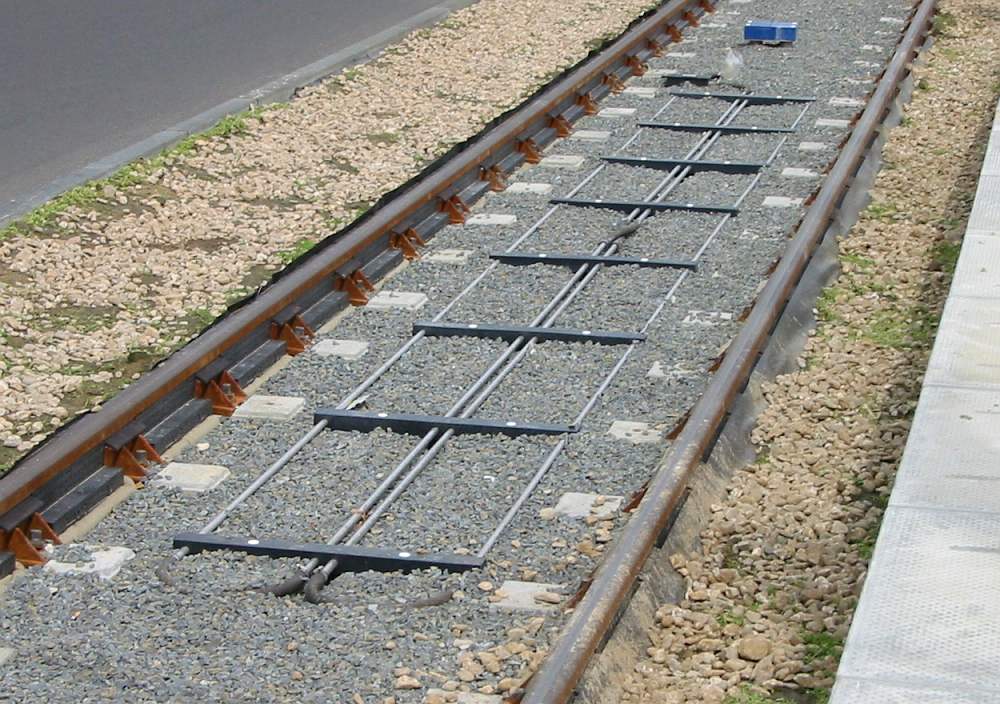
This seems to be some kind of induction loop for communication between a
stationary tramcar and the signalbox. Like this one at the new station Weiden
Schulstraße in Cologne, I saw these things only at places where a tram
starts it's trip after changing the direction. Picture taken on 15 June 2002.
Digital photo by Christoph Schmitz |
|
In this area in the middle of the Bonner Straße in the south of Cologne,
the new station Marktstraße will be built. It will be the southern end
station of the new underground line which shall start operating in 2010, at
least for some time, as a later extension of the line is considered. On the
right a ramp leads down to the next station Bonner Wall which is already under
the surface. On 18 March 2006, when the picture was taken, this area was used to
store the tail modules for the two tunnel drilling machines. Later this modules
will be dragged into the excavation of the station Bonner Wall, which serves as
starting pit for the drilling machines.
Digital photo by Christoph Schmitz (christoph.schmitz2@post.rwth-aachen.de) |
|
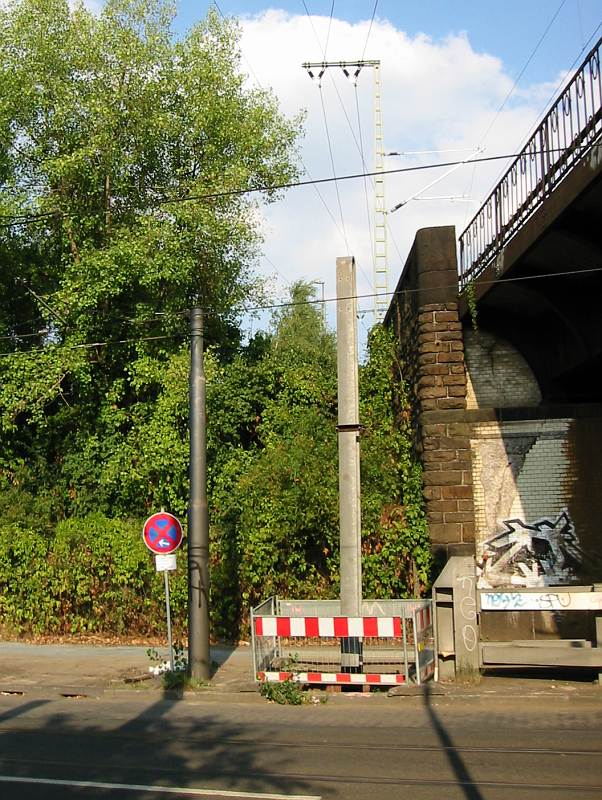
Two catenary masts of the Cologne tram seen on the Zollstock branch of line 12
on 26 August 2003. On the left is the old mast, a new one was errected on the
right. The catenary is upgraded for higher currents, to allow unrestricted
operation of 4000 series low-floor trams. In the background, there are catenary
and feeding lines of the DB line Südbrücke-Eifeltor, with a high
voltage line of DB Energie above them. So this is in fact a "3-current-picture"
(750 V DC, 15000 V AC and 110000 V AC).
Digital photo by Christoph Schmitz |
|
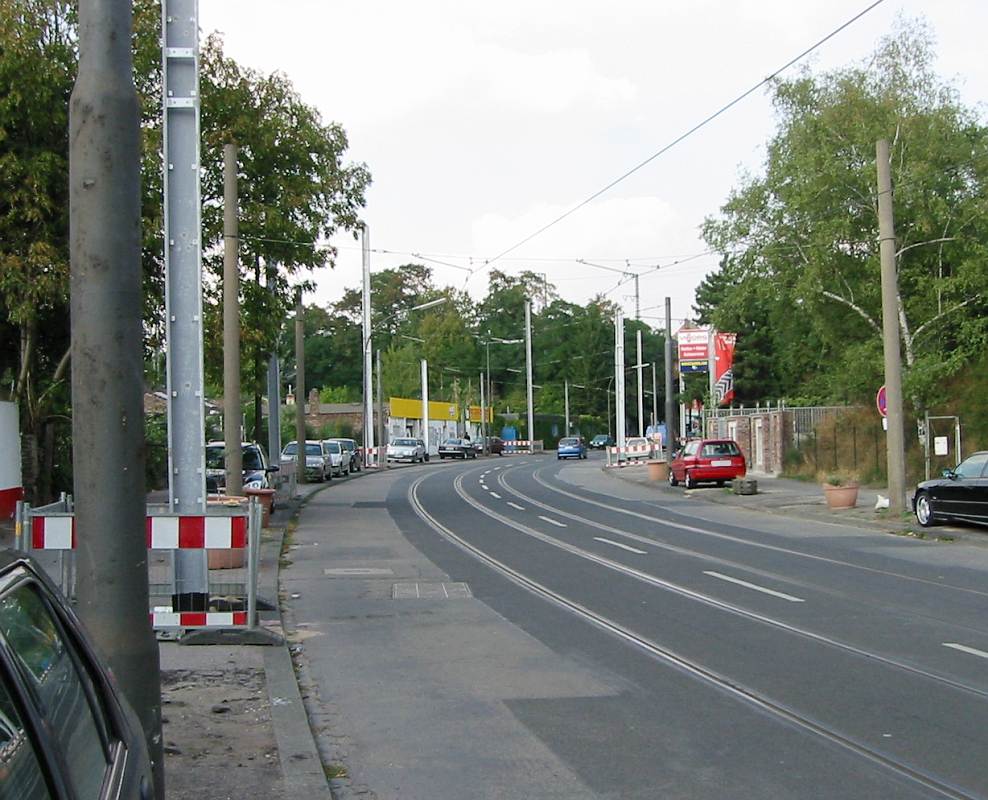
Some catenary masts of the Cologne tram seen on the Zollstock branch of line 12
on 26 August 2003. The concrete masts are old, the steel masts are new. The
catenary is upgraded for higher currents, to allow unrestricted operation of
4000 series low-floor trams. Note that the masts on the left side are higher,
maybe the will carry feeding lines. In the background the catenary of the DB
line from the Südbrücke to the western ring is visible.
Digital photo by Christoph Schmitz |
|
Poststraße station in the center of Cologne. This is a line 17, 18 or 19 train. This station is a low-floor station, meaning that it is necessary to climb from the platform to the high floor of the train using the "folding" stairs. Most underground stations on this line have low floors and result in having to climb up the folding stairs to get inside the train.
There is a low-floor tram underground system that have low floor trains that do not require any steps. (C) 2004 by Josh Hanz (josh_hanz@hotmail.com) |
|
The tram station Weiden Schulstraße in Cologne seen on 15 June 2002, the
first day it is in service. As you can see, this is by now the end of the new
part of line 1, but there are already plans to continue. The pedestrian bridge
visible above the street on the right is at the next station, Weiden Zentrum.
Digital photo by Christoph Schmitz |
|
The tram station Weiden Schulstraße in Cologne seen on 15 June 2002, the
first day it is in service. As you can see, this is by now the end of the new
part of line 1, but there are already plans to continue.
Digital photo by Christoph Schmitz |
|
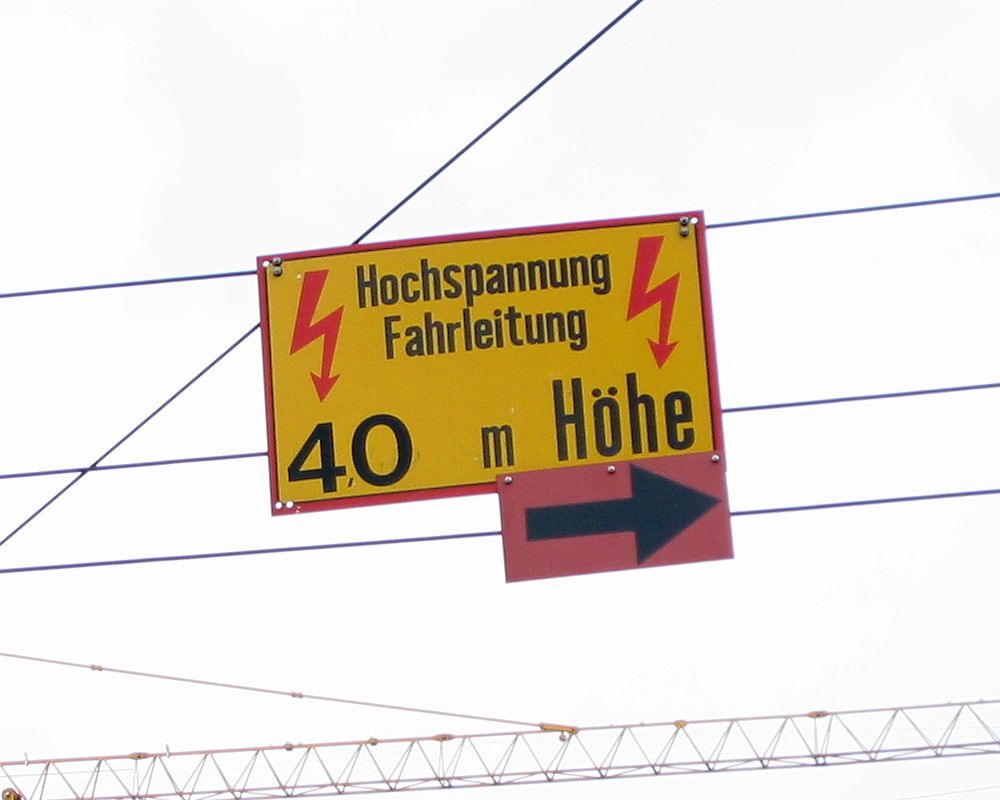
A sign warning of a tram catenary of the Kölner Verkehrsbetriebe (KVB)
seen on 4 September 2002. First one wonders how high their pantographs must be,
but if you look hard, you see that the catenary is 4.0 meters high, not 40
meters. The sign is located on the Ehrenfeldgürtel, but the arrow points
into the Hüttenstraße. So I think it does not relate to the catenary
of the line 13, but to the one of the line 5 running on the Subbelrather
street.
Digital photo by Christoph Schmitz |
|
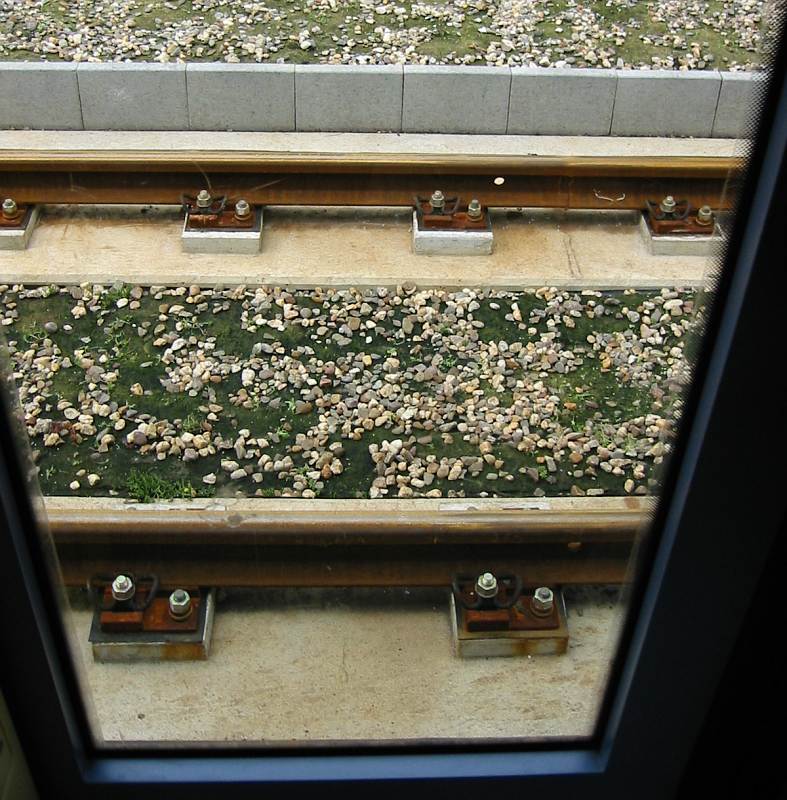
This is a special kind of track, seen on the new part of the tram line 1 in
Cologne on 15 June 2002. It is used to avoid that vibrations from the trams
disturb the nearby TV studios of RTL.
Digital photo by Christoph Schmitz |
|
The new station Weiden West of the Kölner Verkehrsbetriebe (KVB) seen from
the south side on 25 March 2006. This will be the new western terminus of line
1, located next to the S-Bahn (suburban railway) line Cologne-Düren. There
are two platforms, each one located between two tracks. Although the trams
operate on sight, there are signals as the switches will obviously be controlled
by a signalbox. The entrance signals can be seen in the foreground, the exit
signals are placed near the platforms. On the embankment in the background is
the platform for the S-Bahn.
Digital photo by Christoph Schmitz (christoph.schmitz2@post.rwth-aachen.de) |
|
The new station Weiden West of the Kölner Verkehrsbetriebe (KVB) seen from
the south side on 28 May 2006, the day it was taken into service. This is the
new western terminus of line 1, located next to the S-Bahn (suburban railway)
line Cologne-Düren. A tram consisting of two low-floor cars of K 4500
series is waiting on track 1.
Digital photo by Christoph Schmitz (christoph.schmitz2@post.rwth-aachen.de) |
|
The new station Weiden West of the Kölner Verkehrsbetriebe (KVB) seen on 28
May 2006, the day it was taken into service. This is the new western terminus of
line 1, located next to the S-Bahn (suburban railway) line Cologne-Düren.
The picture was taken from the platform of the S-Bahn which is located on a high
embankment. Probably tracks 1 and 2 (at the right platform) will be used for
regular traffic, in case of heavy traffic to the soccer stadium all four tracks
are needed. In the background the tracks turn left to follow the Aachener
Straße into the city.
Digital photo by Christoph Schmitz (christoph.schmitz2@post.rwth-aachen.de) |
|
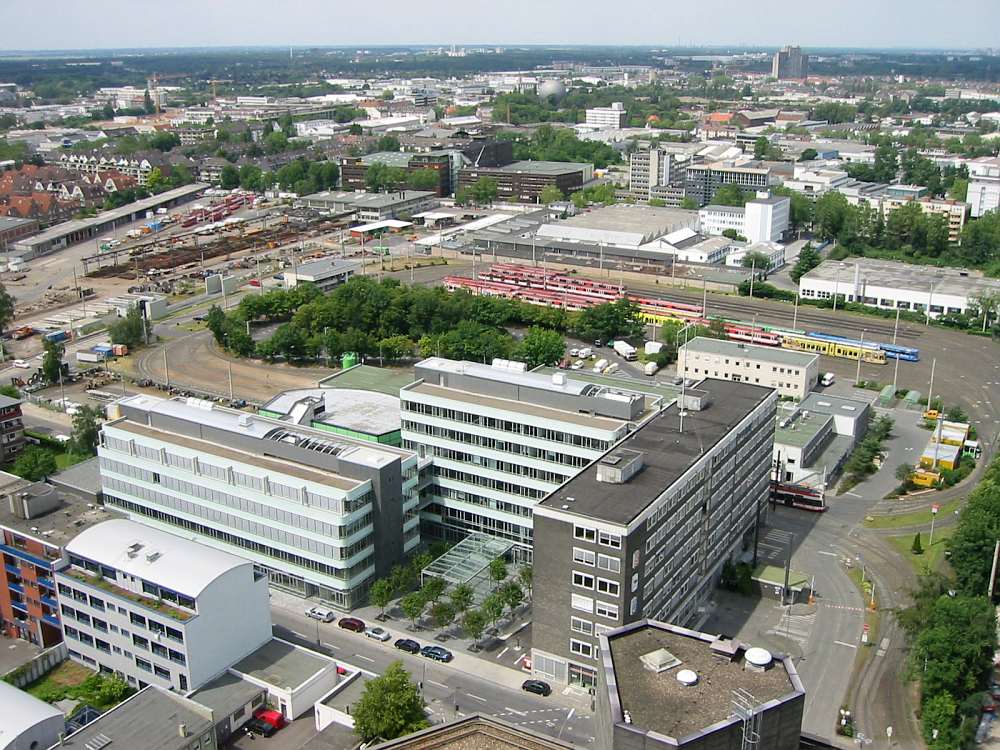
The West depot of the Kölner Verkehrsbetriebe (KVB) seen from the 18th
floor of the DKV building on 26 June 2004. The line leading out is visible in
the lower right corner. Some office buildings of different age can be seen in
the foreground. On the right side in the background several trams are lined up.
Further away on the left work vehicles and materials (rails, sleepers and so
on) are stored.
Digital photo by Christoph Schmitz (christoph.schmitz2@post.rwth-aachen.de) |
|
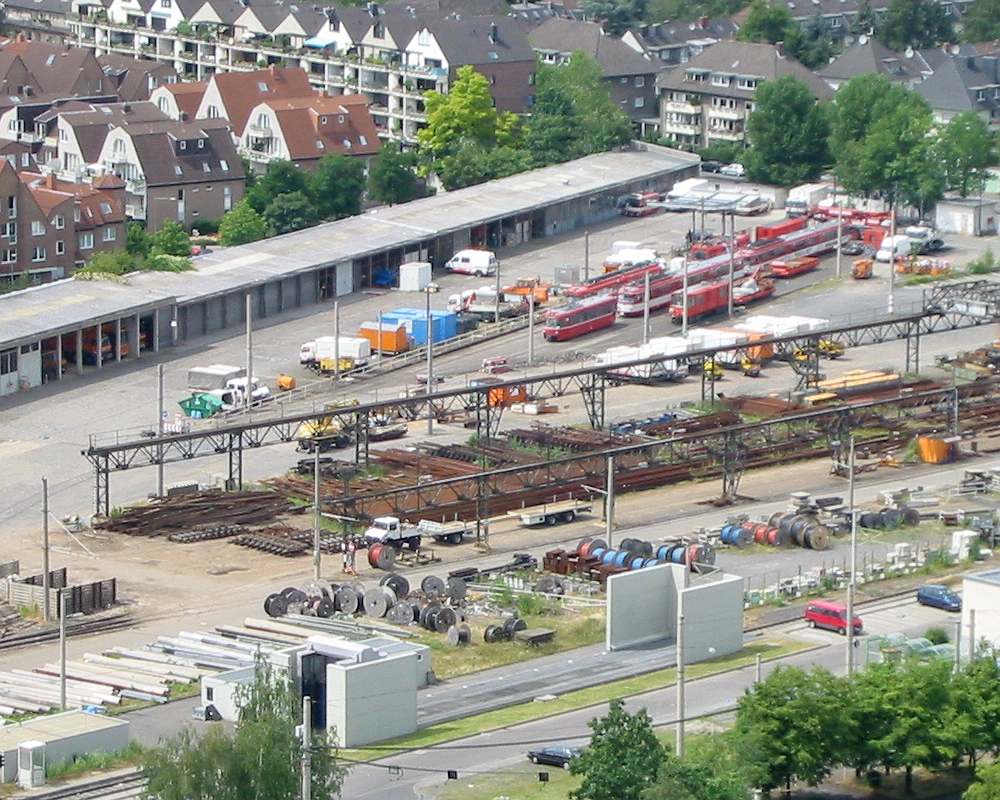
The West depot of the Kölner Verkehrsbetriebe (KVB) seen from the 18th
floor of the DKV building on 26 June 2004. At the lower edge of the picture a
washing facility is visible, above is an area spanned by a stationary crane
where rails and other materials are stored. Behind that you can see special
cars for rail grinding and other purposes, locomotives, flatcars and a dual
mode crane (parked behind the end of the tracks).
Digital photo by Christoph Schmitz (christoph.schmitz2@post.rwth-aachen.de) |
|
The tram station Weiden Zentrum in Cologne seen on 15 June 2002, the first day
it is in service. The street in the middle is intended for busses starting
their way out of the city here. If you arrive with a westbound tram from the
city center (on the left track), you can enter the bus at the same platform.
The pedestrian bridge in the background is the safest way to cross the tracks
and the car lanes at the outside.
Digital photo by Christoph Schmitz |
|
The tram station Zollstock Südfriedhof in Cologne seen from the west side
on 26 August 2003. In the foreground is the switch which connects the dead-end
track on the south side (on the right, not visible) with the two tracks leading
into the city. The track in the background formed the exit of the turning loop
in the past and is not used any more. In the area where the cars are parking on
the track, a new platform with two tracks will be built. The two tracks will
join at a switch and then split again into the two tracks leading northwards at
a second switch.
Digital photo by Christoph Schmitz |
|
Several tramway cars of Colognes tramway company, parked at the depot in Köln Wesseling on 30th Jul 2005.
This picture was taken by Sybic - www.bahnnews-austria.at |