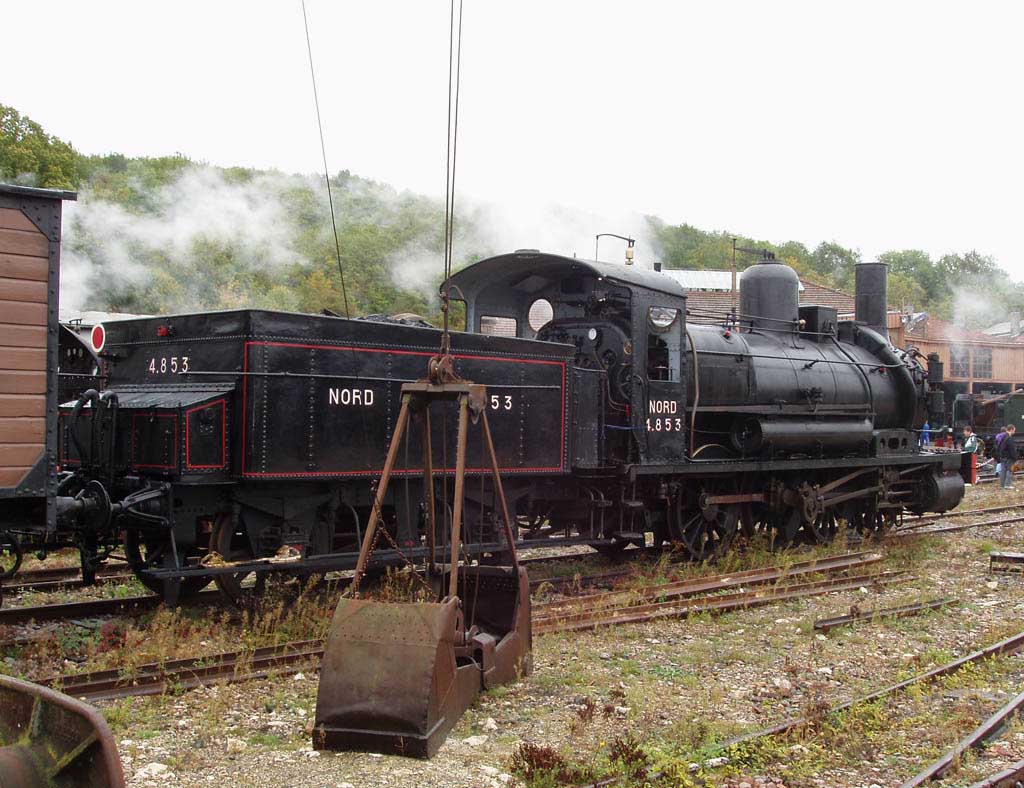
 1853-150.jpg (157100 bytes)
|
The Railfaneurope.net Picture Gallery
Directory: /pix/fr/steam/misc_Nord
Last update: Sat Jan 28 14:38:41 CET 2017
|
|
SNCF Cie du NORD 1853 is preserved by AJECTA society, in the shed of Longueville. 1st October 2005. Photo Patrick Meunier Pmeunier23@aol.com |
|
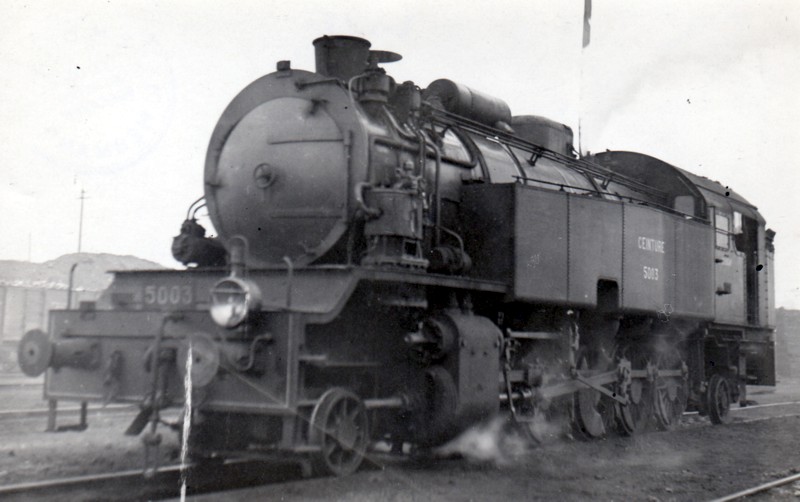
Ceinture n° 5003 (Corpet-Louvet n° 1775/1930). To Nord 5.303 in 1934, renumbered SNCF 2 151 TA 3 in 1938. Scrapped in 09/1962. Bobigny (93), 4/02/1934. Collection Jean-Pierre Vergez-Larrouy (jean-pierre.vergez@tele2.fr) |
|
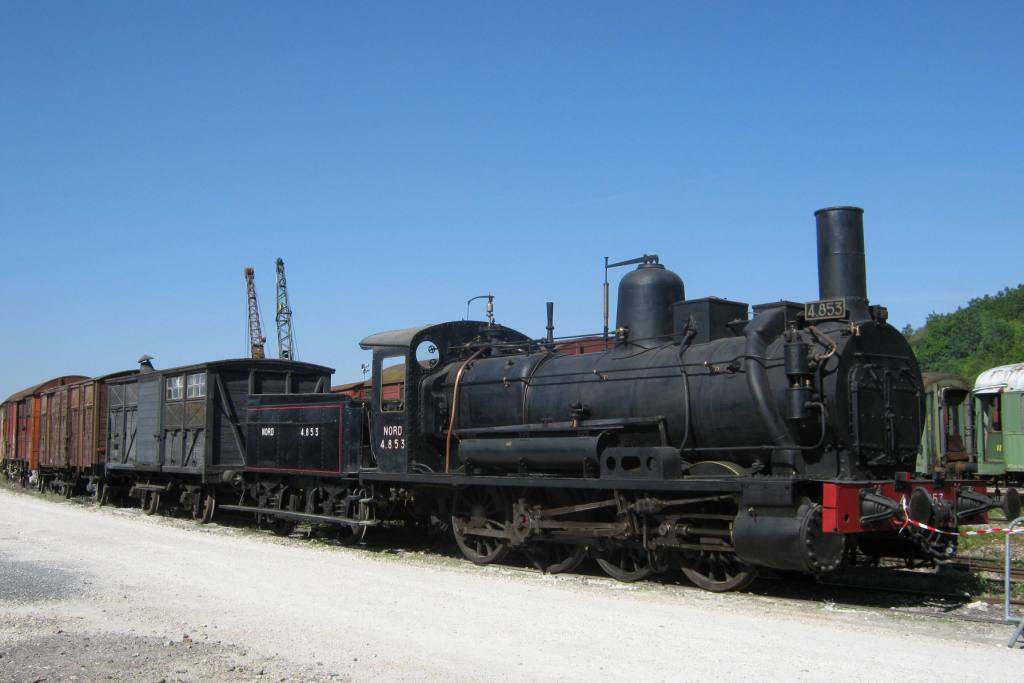
NORD 4.853 stands at AJECTA Open Days in Longueville on 19 September 2010
Photo by Leon Schrijvers Leon2711schrijvers@yahoo.co.uk |
|
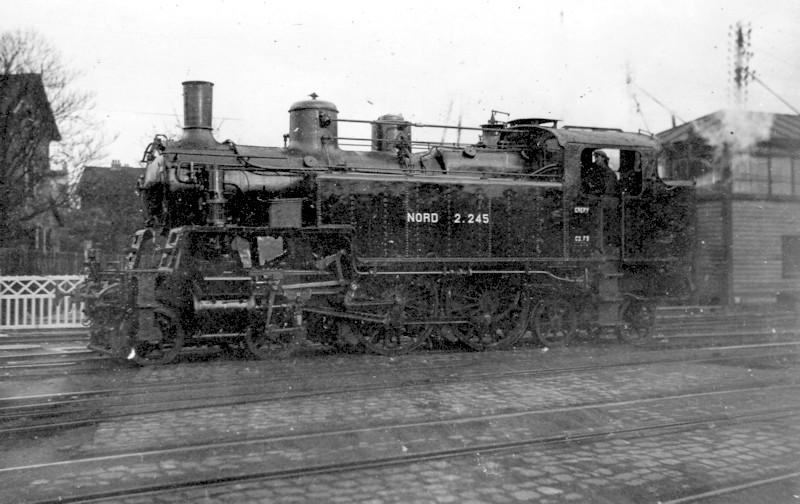
Nord 2.245 (Ateliers du Nord, La Chapelle, 1905). To SNCF 2 222 TA 15. La Plaine, 1933. Photo L. Hermann, collection Jean-Pierre Vergez-Larrouy (jean-pierre.vergez@tele2.fr) |
|
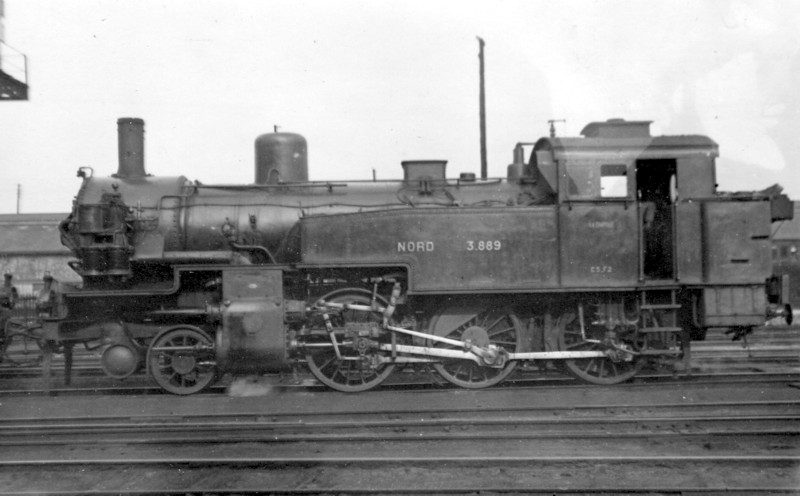
Nord 3.889 (Origin KPEV T 12 Sbr 7707, Borsig n° 7206/1909). To SNCFas 2 130 TC 2. Scrapped in 01/1956. La Chapelle, 1933. Photo L. Hermann. Collection Jean-Pierre Vergez-Larrouy (jean-pierre.vergez@tele2.fr) |
|
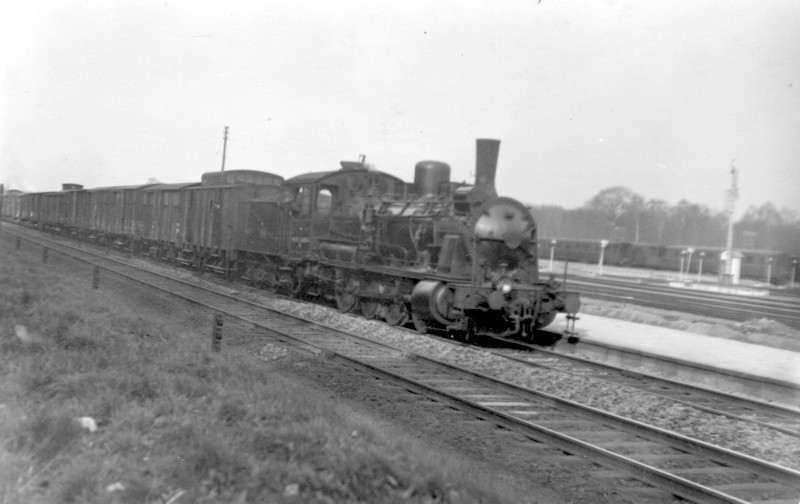
Nord 4.1084 (origin KPEV G 7.2 Bromberg 4686, Schwartzkopf n° 4216/1908) with a freigth train. This locomotive will be renumbered SNCF 2 040 B 83 in 1938, but will be lost in WW II. To DRB in 1945, and later to PKP. Chantilly (60), 1933. Photo L. Hermann. Collection Jean-Pierre Vergez-Larrouy (jean-pierre.vergez@tele2.fr) |
|
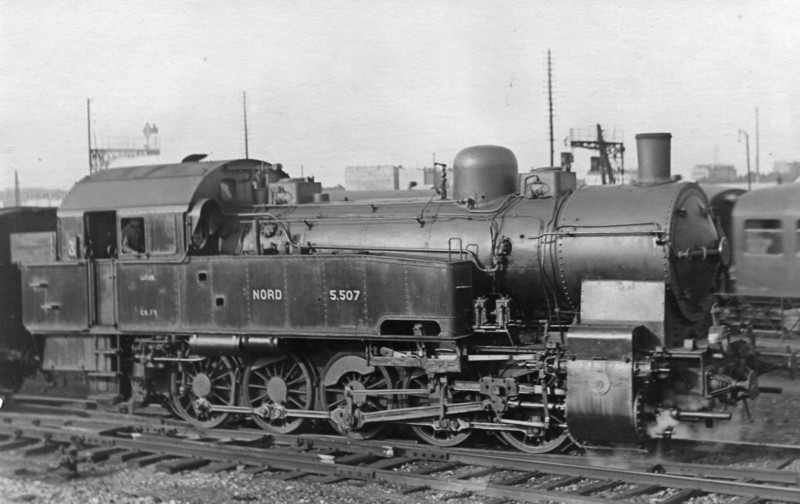
Nord 5.507 (origin KPEV T 16.1 Mgd 8117, Schwartzkopf n° 5785/1916). To SNCF 2 050 TB 7. Paris-Nord, PK 2, 1933. Photo L. Hermann, collection Jean-Pierre Vergez-Larrouy (jean-pierre.vergez@tele2.fr) |
|
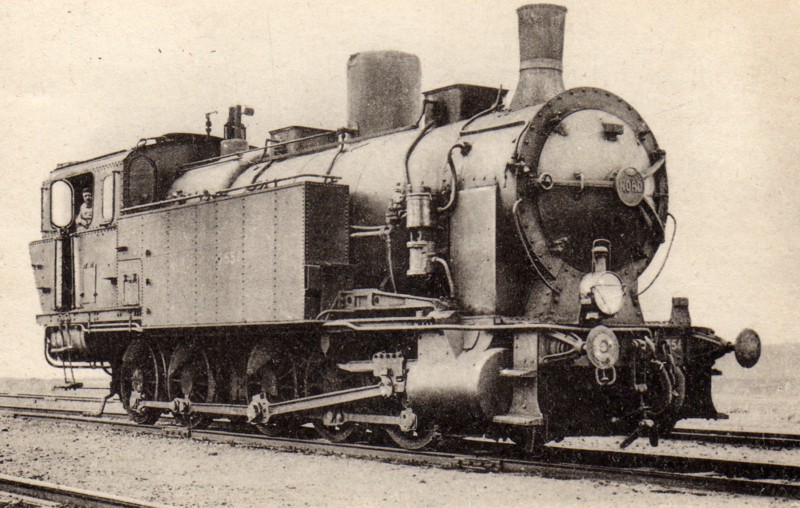
Nord 5.554 (Origin KPEV Altona n° 8014, Henschel n° 6196/1902). This loco was rebuilt as a noraml 050 T by the Nord in 1931. To SNCF as 2 050 TA 4, scrapped by 1945. Collection Jean-Pierre Vergez-Larrouy (jean-pierre.vergez@tele2.fr) |
|
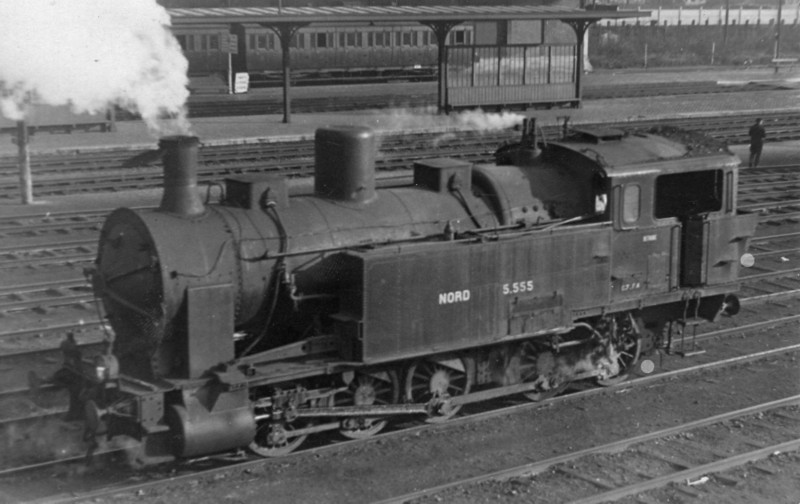
Nord 5.555 (origin KPEV T 15 Bsl 8009, Henschel n° 6564/1904). To SNCF 2 050 TA 5. Bethune (62), 12/11/1938. Photo L. Hermann, collection Jean-Pierre Vergez-Larrouy (jean-pierre.vergez@tele2.fr) |
|
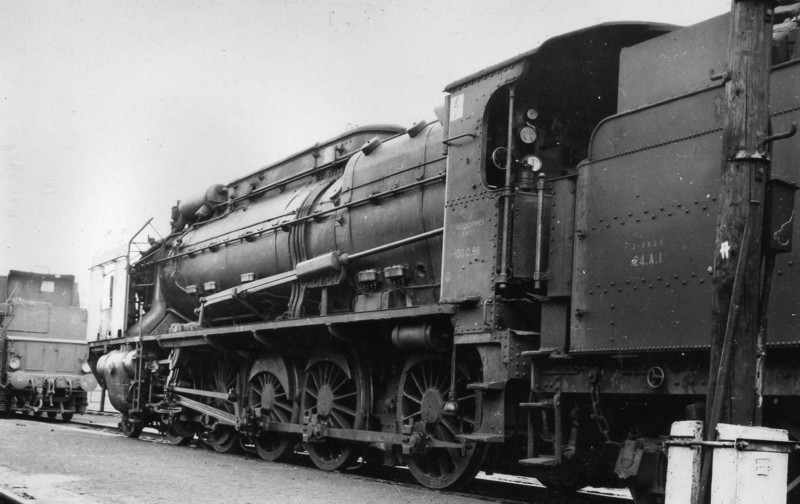
SNCF 2 150 C 86 (ex Nord 5.094, SACM n° 7225/1922, scrapped in 1955). Valenciennes (59), 07/1954. Collection Jean-Pierre Vergez-Larrouy (jean-pierre.vergez@tele2.fr) |

 Ceinture_5003.jpg (76643 bytes)
 NORD4853.jpg (71712 bytes)
 Nord_2_245.jpg (113904 bytes)
 Nord_3_889.jpg (79223 bytes)
 Nord_4_1084.jpg (74056 bytes)
 Nord_5_507.jpg (92864 bytes)
 Nord_5_554.jpg (127712 bytes)
 Nord_5_555.jpg (88957 bytes)
 SNCF_2_150_C_86.jpg (94914 bytes)