 M047.jpg (106425 bytes)
|
The Railfaneurope.net Picture Gallery
Directory: /pix/ne/Israel/misc
Last update: Sun Jun 23 08:54:28 CEST 2019
|
|
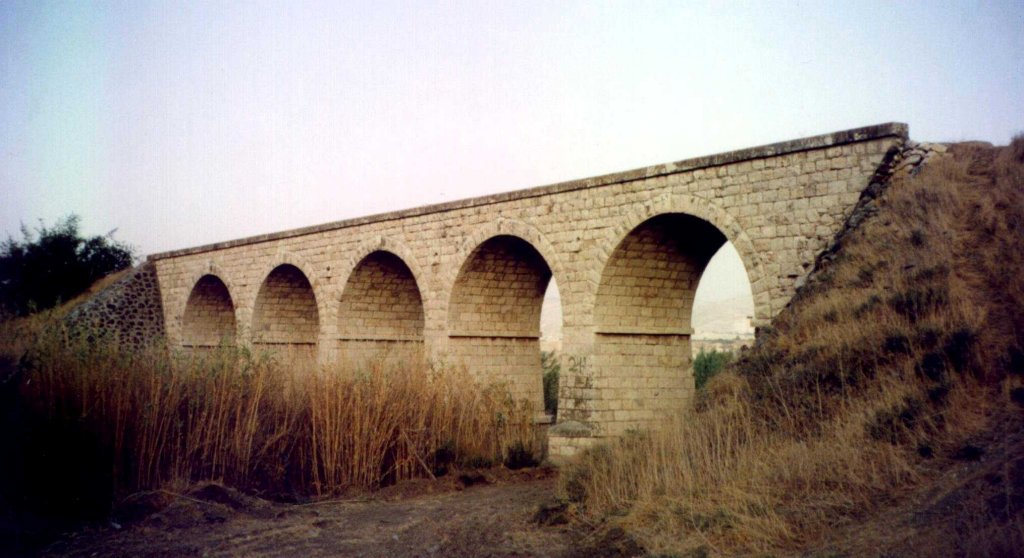
A century ago, it was possible to travel by train from Haifa in then-Palestine to Damascus in Syria and as far south as Jordan and Arabia on the Hedjaz Railway, a huge network of narrow gauge lines built between 1900-1910 by the Turks and their German allies. In Palestine, the line traversed several rivers on stone bridges before crossing the border to Syria. Here’s a typical Hedjaz Railway bridge, in the northern Jordan Valley. This line does not exist anymore – there are no rails on the bridge. South of Tiberias, 2000.
Photo and scan by Alon Siton <a_siton@hotmail.com> |
|
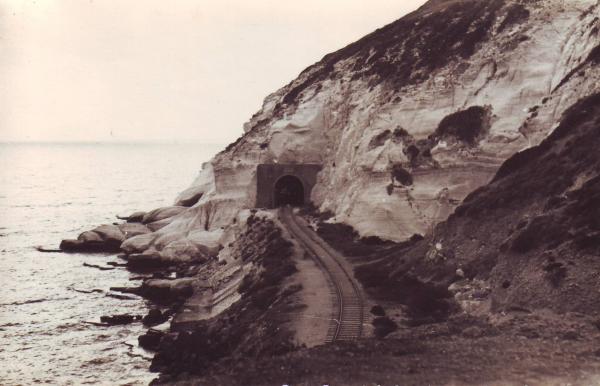
Rail tunnel at the Israel/Lebanon border near Rosh HaNikra grottoes. This was the short
living railway line Haifa - Beirut - Tripoli opened in 1942 (standard gauge). It was
mostly used by military trains. Civilian trains between Istanbul and Kairo were
planned, but never permitted by the British military. In 1946 the section across the
border was already closed, but in 1964 when this photo was taken, the track was still
intact.
Photo taken by Shlomo Berg, from Wikimedia Commons (public domain) |
|
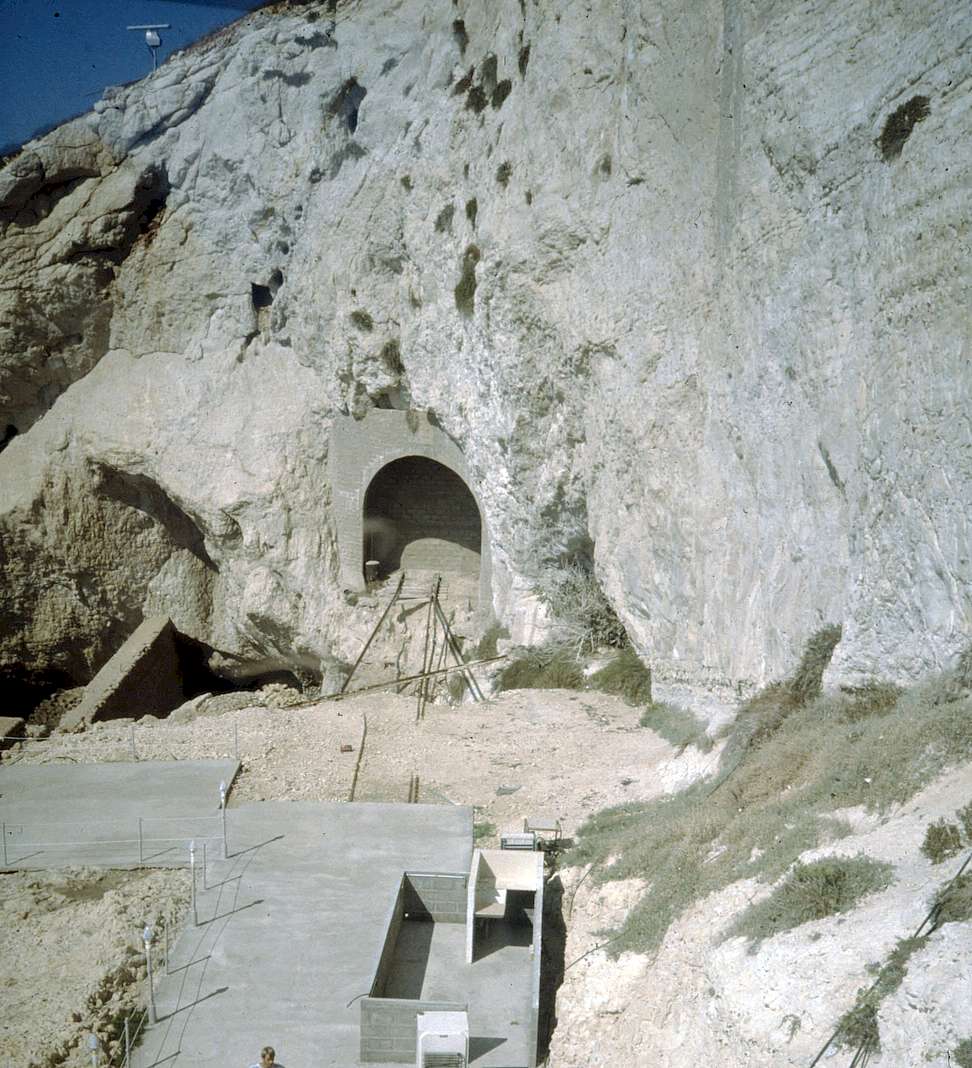
Abandoned rail tunnel with destroyed tracks, now closed by a brick wall, at the Israel/Lebanon border near Rosh HaNikra grottoes. This was the short living
railway line Haifa - Beirut - Tripoli opened in 1942 (standard gauge). It was
mostly used by military trains. Civilian trains between Istanbul and Kairo were
planned, but never permitted by the British military. In 1946 the line was
split up, the northern part went to Lebanon and was closed after war damage in
1976. The southern part went to Israel and is still operated between Haifa and
Betzet.
Photo taken in 1989 by tobias b köhler (tbk.uncia@gmail.com). |
|
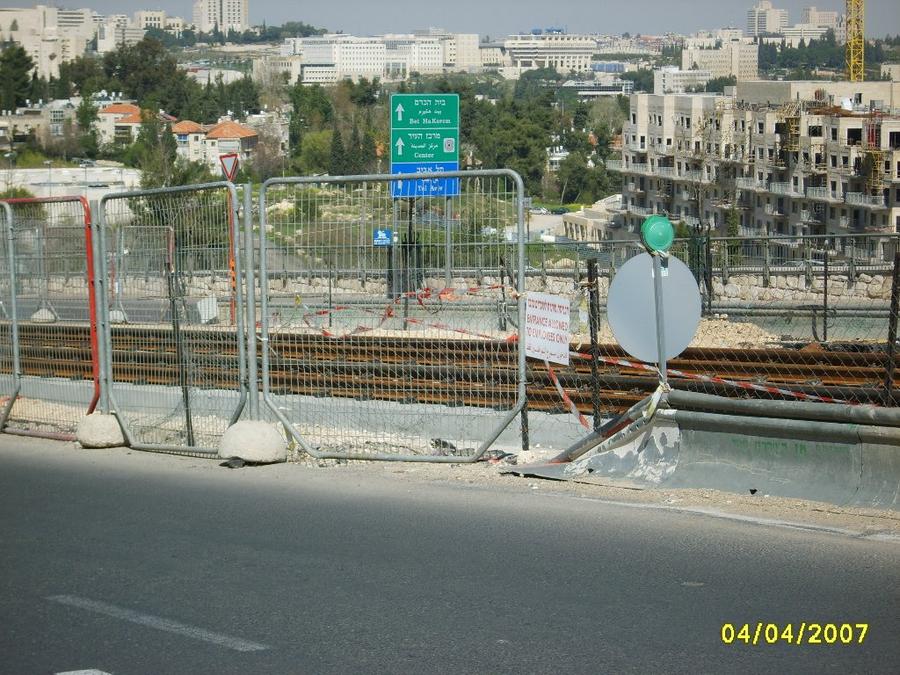
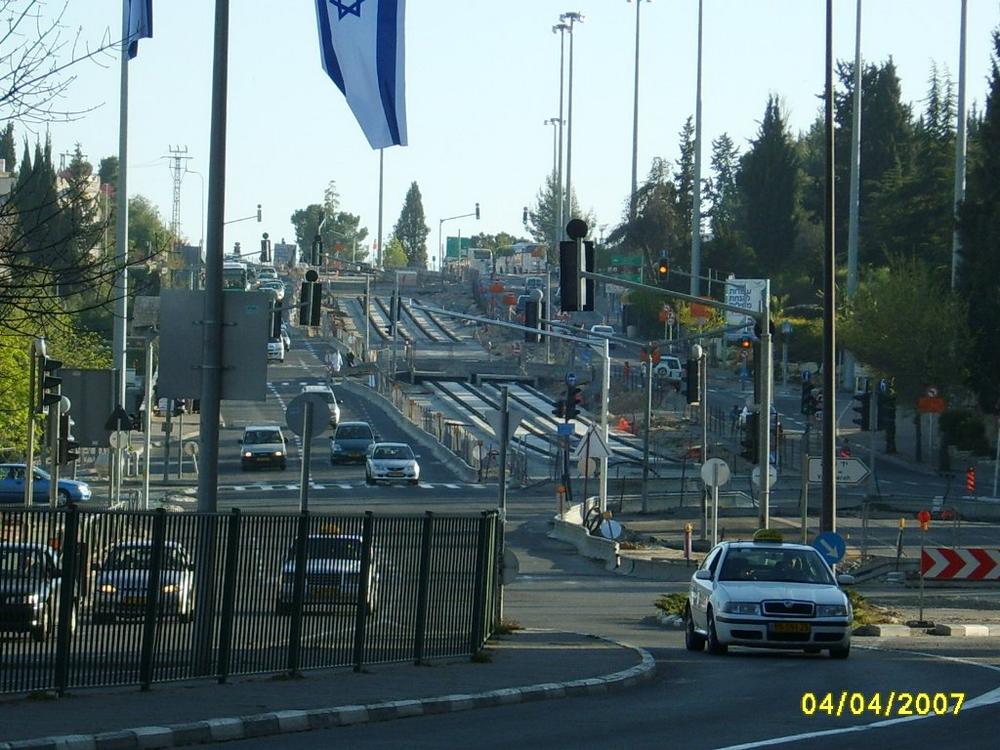
Den Bau der neuen S-Bahn in der Israelischen Hauptstadt Jerusalem.
Photo : Kichel Michael (Miha1982@walla.co.il) |
|
Den Bau der neuen S-Bahn in der Israelischen Hauptstadt Jerusalem.
Photo : Kichel Michael (Miha1982@walla.co.il) |
|
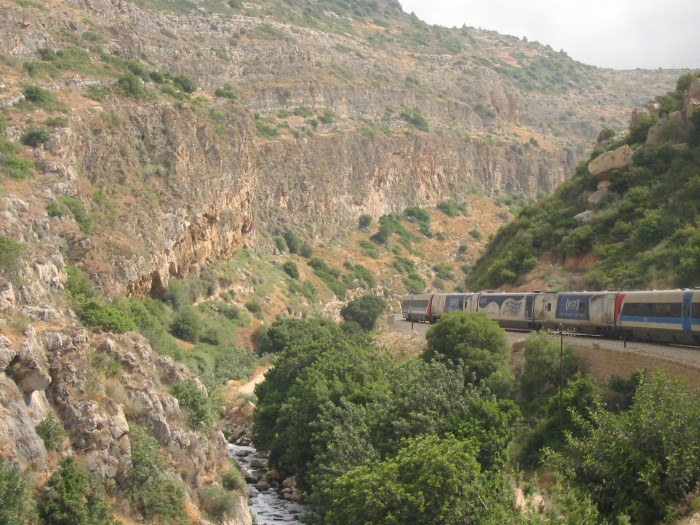
Soreq-valley, Israel, 12/05/2005.
Since the Spring of 2005, the Jerusalem railway line is reopened for the public. Although the distance between Tel Aviv and Jerusalem is less than 100 km, the train goes one and a half hours, as Jerusalem is situated 800 m above the sea level. The last part of the route between Bet-Shemesh and Jerusalem is very scenic: the train winds in the narrow valley of the Soreq-river. It is a rare view to see open water flowing in May in Israel. The photo was taken from the last coach of a 12 coach DMU. 2005 tavasza óta a Jeruzsálemi vasút újra megnyílt a nagyközönség előtt. Noha Tel Aviv és Jeruzsálem távolsága kevesebb mint 100 km, mégis a vonat kb. másfél óra alatt teszi meg ezt a távot, mert Jeruzsálem 800 méterrel magasabban van a tengerszintnél. Az út utolsó szakasza rendkívül látványos: a vonat a Soreq-folyó szűk völgyében kanyarog. Izraelben ritka látványt nyújt a nyílt folyóvíz májusban, a legtöbb folyó eddigre elapad. A fotó egy 12 kocsis motorvonat hátsó kocsijából készült. Photo: Zoltán Ádám Németh (nza@freemail.hu) |

 Rosh_HaNikra_1964.jpg (37459 bytes)
 Rosh_HaNikra_1989.jpg (161186 bytes)
 S8002979.jpg (134369 bytes)
 S8003003.jpg (129275 bytes)
 Soreq-valley-120505-NZA.jpg (138414 bytes)